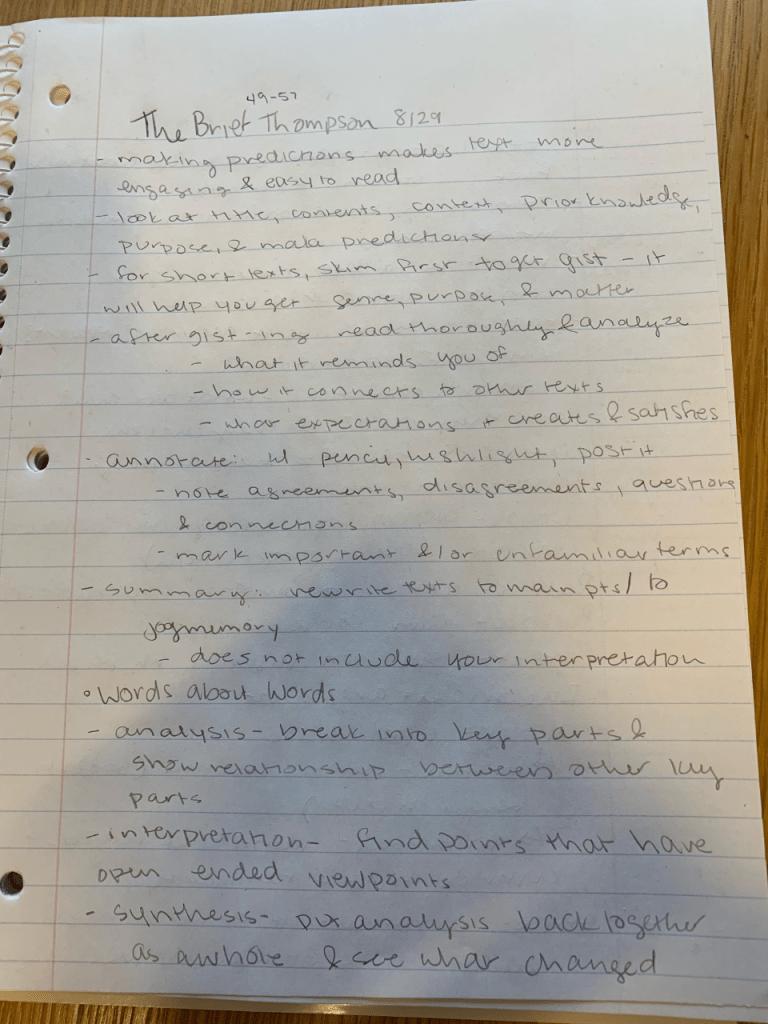
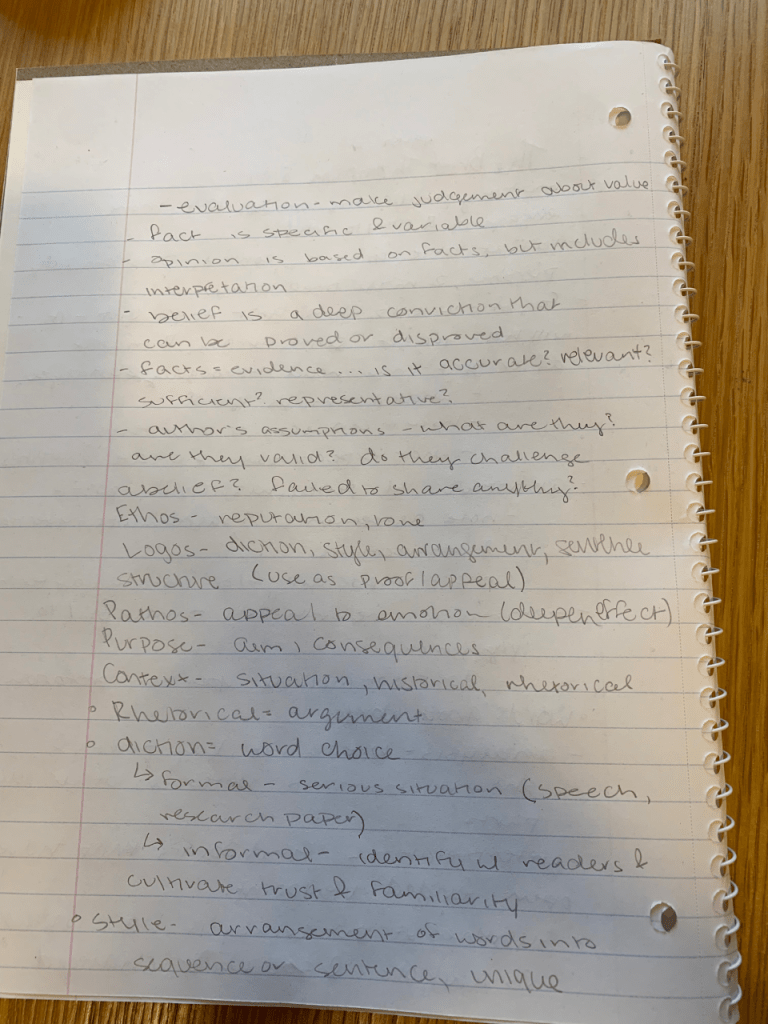
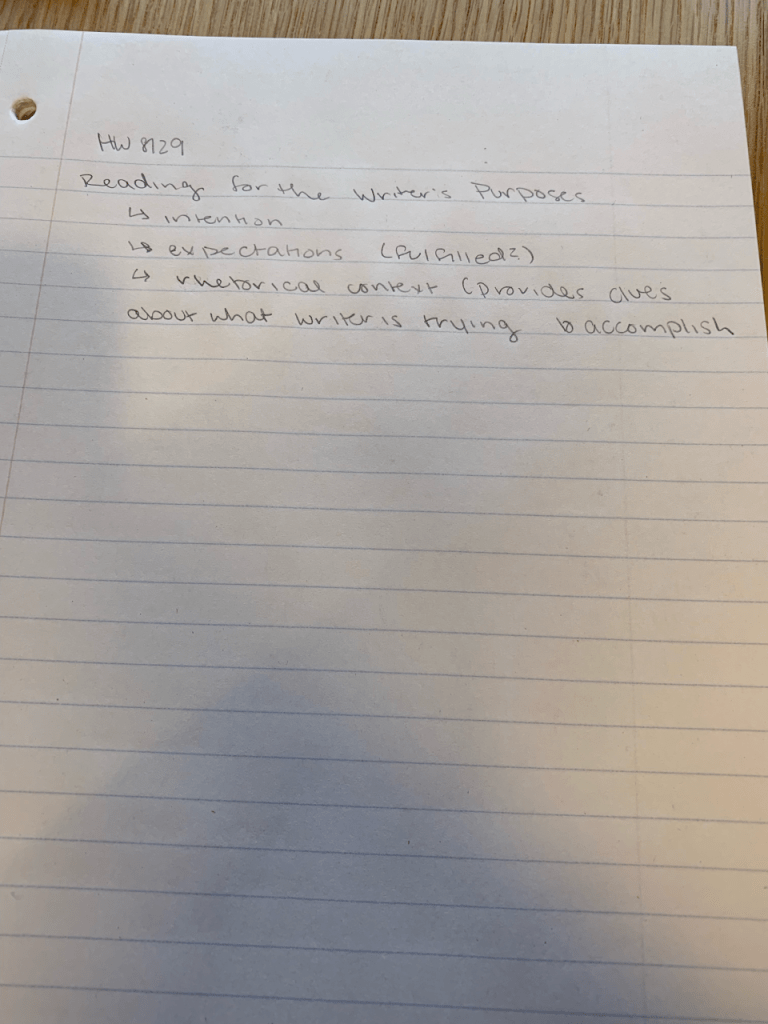
CL 9/12

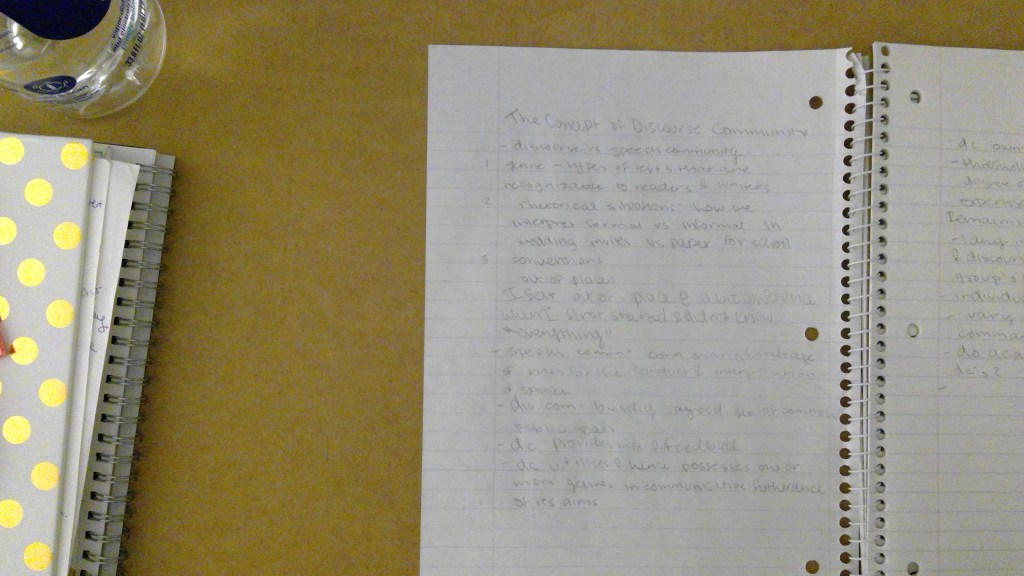
  1. Speech communities are centripetal because they tend to absorb people into the general fabric or culture. Discourse communities are centrifugal because they tend to separate people by interest or occupation.
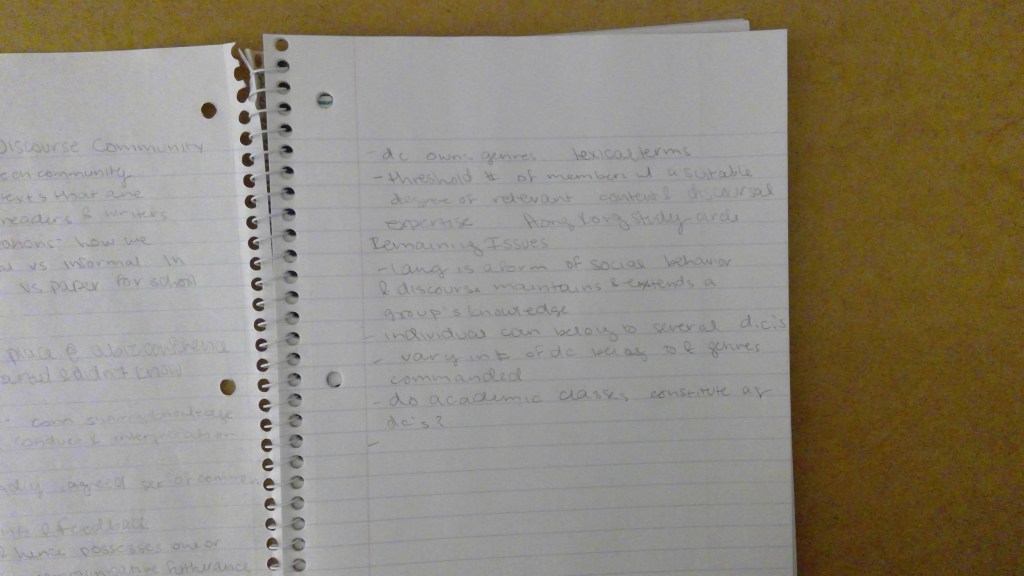
  2. 1. a discourse community has a broadly agreed set of common goals 2. has mechanisms of intercommunication among the members (facebook) 3. uses its participatory mechanisms primarily to provide feedback 4. community has aquired specific texts (menu) 5. acquired specific lexis 6. has a threshold level of members with a suitable degree of relevant content and discoursal expertise.
  3. Discourse communities are not sought after or talked about. We all just settle into our “belonged” area and can feel uncomfortable being in a specific community, but do not know how to get out or feel like you belong.–problems of the concept of discourse community- continuous contradictions if don’t have enough acceptable evidence to prove a lexis exists, or removed from reality, people inside don’t see beyond their bubble, or not everyone has same common goal and splits can happen due to this, the novice to expert ratio has to be optimal

speech community– draw in people, inherited by birth, accident or adoption

discourse communities– push people apart based on goals or occuption, when people join a discourse community they’re being pushes people apart from their speech community– lingo, presenting yourself, particular way of writing

language changes the way we view the world

lexis- common ground of vocab used by specific community

Swales questions: speech vs discourse comm

  1. Analysts cannot tell what discourse communities are linked and how they get pushed from one community to the next. the conversation of how dis. comms. evolve and they change genres to fit their needs, conflicting with each other
  2. this piece fills the gap in the triangle that Swales sees is filled by him explaining what each are and how we get into them and the 6 characteristics
  3. audience is everyone- everyone is in some type of speech or discourse community. maybe more specifically for professors, professionals to explain their outlook on the world based on their group, english professors
  4. danger is realizing your group and pushing yourself out of other, personal goals being different between each other in the same discourse community
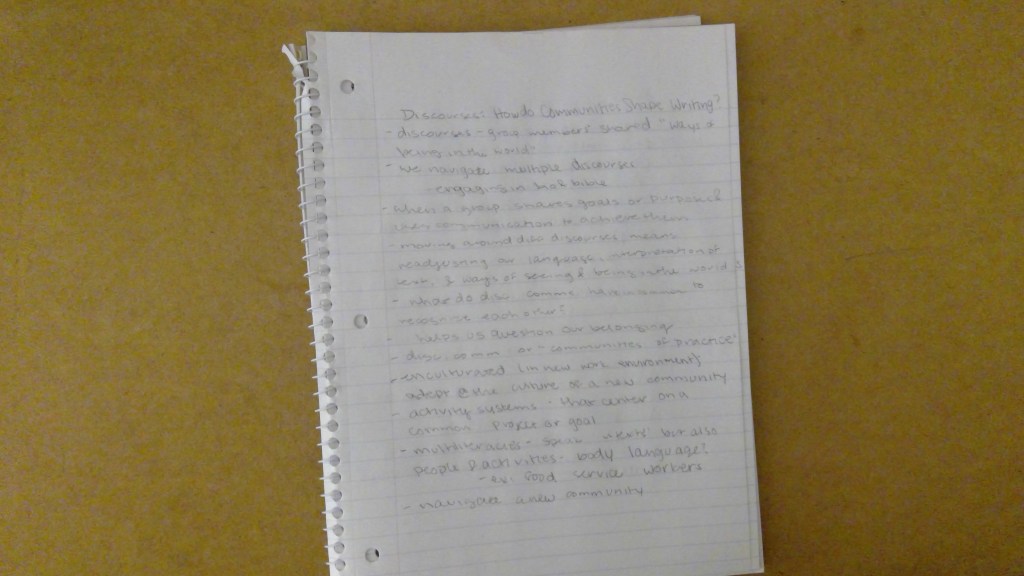
HW 9/10

multiliteracies argues that these blue collar workers do not just read texts; they read people and situations

“not all of us were born with a trust fund” – suggests alternative reasons you are a waitress and not just because you don’t have an education– sassy

disagree with “mindless” work and little skill set needed– instead literacy today constitutes of standardized tests

waiting tables takes a different kind of literacy and schools are starting to look at multiliteracies

certain literacy to menu and memorizing it is crucial to how you can do your work

more than just knowing the menu but knowing meaning and process of food production , read the menu and the customer- satisfy their appetite and explain sauces, pestos on menu

position of authority and “magic words” to persuade customers into a dish described

compares literacy in taking orders during “full” tables full from normal classroom to rather emergency ward of hospital

notion of discourses are different with every table and must read and listen to each table’s mode of conversation/ casualism

literacy = classroom vs real world scenarios

stereotyping began when writer said most waitresses are dumb and uneducated, also between 16 and 24. the FACT is this is most young adults’ between jobs or free time

its not completely impossible to stereotype because there will always be some kind of “group” or “discourse” for each profession.

CL 9/10

triangle of issues, writer, reader and with gaps

issues- ethics of admin

writer- Stein (uses irony and humor, post 9/11, published in Time Magazine, US forces in Afghanistan, deploying forces in Iraq

reader- time subscribers, people who stay up on current events

baseball because its America’s pasttime

2. What is the gap in this conversation? Gap is the lack of conversation of America and how we are suffering post 9/11. At this time, Yankees may be superior but is America really superior right now? The more important issue is military forces rather than baseball. other gaps: all is fair but question if US really is fair, unacceptable use of force and money, this is not a good look for US, the readers to understand there are big issues in the US and things like A Rod are a distraction

3. Yes, I still agree Stein is writing to multiple viewpoints- especially because where America is at as a country

4. What is the danger of an essay like this? The danger for readers for how Stein is writing could be the people taking him seriously, that America truly is the best and they form their viewpoint to not see a problem with the “superior” or lack thereof, of America. Readers may not hear the satire and irony in his writing and take it literal. Or the readers may get offended in how he is speaking because they do not realize his writing persona. Distracting with baseball talk.

5. What is the purpose of Stein’s challenging essay? Stein’s essay challenges the readers to look at historical perspective, strengthen their recognition of satire writing, as well as apply current events to the old writing.

John Swales

  1. Speech communities are centripetal because they tend to absorb people into the general fabric or culture. Discourse communities are centrifugal because they tend to separate people by interest or occupation.
  2. 1. a discourse community has a broadly agreed set of common goals 2. has mechanisms of intercommunication among the members 3. uses its participatory mechanisms primarily to provide feedback 4. utilizes and possesses one or more genres in the communicative furtherance of its aims 5. acquired specific lexis 6. has a threshold level of members with a suitable degree of relevant content and discoursal expertise.
  3. Discourse communities are not sought after or talked about. We all just settle into our “belonged” area and can feel uncomfortable being in a specific community, but do not know how to get out or feel like you belong.

CL 9/5

  1. Stein does a great job in refuting his claim.
  2. However, he does not break down the basic terms the audience needs to know before reading, if the reader is not up to date on historical events or baseball. The partition of the point Stein is trying to make isn’t clear. I think he relies a lot more on sarcasm and folly then facts and knowledge.
  3. I think Stein is aiming towards an audience that wants to see multiple views. Because this is for Times Magazine, there is a variety of people that could be reading this. Those people want to read multiple viewpoints and learn more about what they may not understand.
  4. Stein is portraying himself as an expert in baseball, A-Rod’s career and America’s greatness related to the Yankees. He portrays himself high on his horse of snarky, humorous writing about his opinion of the “best” baseball team.
  5. 2004 public conversation about ethics of military use and awarding contracts
  6. Stein wants to alert his readers that America is dominant right now via the Yankees. But ultimately, he is embodying what America does oversees. On the contrary, the gap could be there are other every day pressing needs rather than America being superior and and a baseball team. Or, distraction from reality. Reality is military involvement but not everyone cares about that issue and is reading for the baseball content. In a literal take, distracting ourselves from reality of post 9/11 America.
  7. I don’t think Stein fills the gap…

CL 9/3

  1. Author is Joel Stein; intention is prove the Yankees are superior
  2. intentions to join America’s greatest team, teaching us dominance is okay.
  3. rhetorical context of A-Rod getting traded, $252 million contract; historical- years after 9/11 deployment to Afghanistan and Iraq; president is George W Bush
  4. current events/news magazine subscribers (millions); writers are speaking to baseball lovers, and those that don’t understand the Yankee’s teach the true story of our country. address by “Yankee haters”
  5. talks history of multiple teams
  6. does not build a case with academic writing
  7. yes, starts off with trading history and then continues into complex topic with Canadians, etc.
  8. no, persuasive toward Yankees
  9. yes by using a “we” narrative, us as a country

does appeal to reason

author invokes emotion and uses laugh to dark with folly and humor

notes: Stein is: prowriter, humorist, writes satires (irony), sarcasm, denounce folly

way to make a public, political statement in writing